I've been disappointed with television shows before. I stuck with Heroes all the way through the revival a few years ago, and it never rose above mediocrity after the first season. I was there when Lost revealed that the island was built around a Hellmouth, and they never bothered calling in Buffy to deal with it. House of Cards, initially one of the best shows I had ever seen, was slowly degenerating even before Kevin Spacey tried to deflect from underage rape accusations by coming out as gay. I've been disappointed before. But, until Game of Thrones Season 8, Episode 5, I'd never been outright angry.
Of course, there has been a ludicrous amount of analysis and thought devoted to Danaerys' sudden turn from self-righteous crusader to genocidal maniac, and much of it is far better than what I could offer. Honestly, though, it wasn't Dany's actions after the bell rang that infuriated me. I'd been watching with clenched fists and narrowed eyes since Drogon dove out of the sky and destroyed the entire Iron Fleet with dragonbreath inexplicably upgraded to deal massive concussive force. The sudden power-up would have been bad on its own, but combined with the entire structure of the season thus far... well, let me explain.
In both the books and the HBO show, the first thing we ever see is an attack by mysterious creatures from the far North, beyond the Wall. Throughout the entire story, while wars are waged and kings are made and then murdered, Jon Snow had been at the Wall, reminding us over and over that all of that Southron drama only mattered insofar as determining how much help the Night's Watch would have in protecting the Seven Kingdoms from the dead. The White Walkers were the looming threat, advancing ominously closer, and Westeros was not prepared to even recognize the threat, let alone resist it.
Four costumed corbies drop their prop weapons and lunge at the party. One, dressed in a fine (if filthy) pink gown with a conicle, veiled hat is decapitated by Molido almost immediately. A horrified shriek emerges from the beak of a corby dressed like a young noble man: "My fiance! NO!"
Zaphkael quickly realizes that the odd man on the throne is using some sort of magic to project his voice through the oddly silent corbies. As they attack, shrieking, theatrical lines emerge from their throats. "I shall avenge the princess!" "How dare you filthy ruffians harm my daughter!" "I shall slay thee in my beloved's name!"
Before long, another of the corbies are dead, and two more--the princess' father and husband-to-be--are unconscious. The red-faced man shrieks in annoyance, and, as Hanzo looses an arrow at him, he casts a spell and disappears. The adventurers are left alone in the throne room.
Amidst the combat, their bound trogdolyte prisoner was murdered by one of the corbies, but the two unconscious "actors" are quickly bound, gagged, and dragged out to the courtyard to be locked in one of the empty guard towers. The heroes consider their options--pursuing the red-faced man or focusing on finding the "hidden vault" referred to in the letter to Ameiko's father--and decide to focus on the latter. Reasoning that vaults are most likely to be underground, they return to where they first encountered the trogdolytes and head down the stairs.
They encounter a group of trogdolytes at the far end of a long room, and the lizard-like creatures quickly retreat down a side hallway. The adventurers sense a trap, but pursue them regardless. Molido, leading the charge, walks right into the center of a pillared chamber and is immediately surrounded by trogdolyte attackers, including their apparent leader, an albino trogdolyte wielding a nasty-looking morningstar.
Not long after sunrise, the party begins searching along the coast for any sign of a secret entrance into the castle. After inspecting the sides of the lagoon and the east-facing wall of the harbor, Hanzo and Molido decide to swim out into the sea, hugging the shoreline. They're out in the cold sea water for around half an hour without success before deciding to scale the cliff up to the castle's entrance.
When they reach the top, Molido heads down the road to report to Brixton and Zaphkael about their lack of discovery, while Hanzo stays behind to watch the keep's front gate. A few minutes after they part, the old iron gate swings open, and a trio of dire corbies armed with crossbows and a longspear march out, leaving the gate wide open behind them.
Molido gathers the others, and they return to Brinewall Castle. To Hanzo's surprise, they didn't encounter the corbies on their trip. They investigate the road leading from the keep to the village and find tracks leading into the dense woodlands south of the castle. Wary of an ambush, but presented with a temptingly open door, the party decides to head into the castle's gatehouse and lock the gate behind them.
Preparations for the expedition to Brinewall begin, as Sandru, Brixton, Zaphkael, Molindo, and Hanzo decide how best to spend the 2,000 gold pieces Ameiko has volunteered to get Sandru's caravan moving as soon as possible. In addition to the adventurers, Sandru, and Ameiko, the group will be joined by Koya (Sandru and Zaphkael's adopted mother), Shalelu the elven ranger (Molindo's adopted big sister), and two brothers named Bevelek and Vankor Brati, who will be helping to drive the wagons. With the decision to add a second supply wagon to the caravan, and the need for a cook, Brixton and Sandru end up hiring a middle-aged dwarven couple, Baradrum and Aggaela Korrick, a cook and wagon driver respectively.
Hanzo requisitions a special chest which keeps its contents frozen even in the warmest climates.
Molindo, preparing for the harsh climes of the north, and despite it currently being the middle of summer, buys a variety of cold-weather gear--just in case.
Zaphkael spends the three days brewing potions and scribing scrolls to prepare for the journey.
Finally, after much debate, the group settles on how many provisions and trade good they should bring with them, in the hopes of turning a profit at Roderic's Cove, the last village they will pass through before reaching Brinewall.
With everything arranged, the adventurers spend Sunday afternoon relaxing and enjoying themselves. The journey will take more than two weeks, by Sandru's estimates.
The night passes without incident, and come morning, the adventurers break camp and decide to head southwest, to the nearer of the two remaining spots circled on the fan-map. With Molido growing more confident in his survivalist skills and familiarity with Brinestump Marsh, they have little difficulty navigating the swamp's waterways until they reach the spot.
They find another shipwreck, though unlike the flame-gutted remains of the first ship, this one seems to have been broken in half and stripped down to its skeleton. (The group suspects that the Licktoad goblins used wood salvaged from the wreck to build their village.) Submerged in the mud, they find a bronze nameplate naming the ship Kaijutsu's Blossom, and carved in a nearby tree--apparently by survivors of the vessel--is a rough map showing a path to a spot along the southern cliffs corresponding to the final "X" on the fan. Hanzo, recognizing the name "Kaijutsu," decides to dig the nameplate out of the mud and carries it to Proudstump's rowboat, intending to offer the piece to Ameiko as a gift. As he begins digging, however, three creatures rise from the sticky mud around the ruined ship: a trio a human skeletons, encrusted with filth, their jaws hanging loosely open in a silent shriek of challenge.
In a brief and bloodless battle, the adventurers easily dispatch their undead foes, then proceed southward to their final destination.
Despite their pockets being full of fresh coin, the group decides to forego spending it just yet and return to Brinestump Marsh to investigate the locations marked on the fan's map. They gather at the Rusty Dragon for a hearty breakfast before they set out, and soon receive news of the attack on the watchmen the prior evening. Brixton and Hanzo decide to speak to Sheriff Hemlock about the incident, while Zaphkael and Molido head to the scene of the crime to investigate.
They learn roughly the same set of facts: the guard had just crossed the bridge south of town and was walking along the Lost Coast Road. Two figures emerged from the forest. The guard called a challenge, but they kept approaching until they entered the ring of his lantern's light and were revealed to be animated human skeletons. The guard skirmished briefly with them, receiving a cut on his arm from one of the creatures' fleshless fingers, but found his simple short sword to be largely ineffective against enemies with no skin or blood. He retreated across the bridge, back into Sandpoint, and the skeletons did not pursue him.
Additionally, Zaphkael and Molido find the skeletons' tracks. After pacing up and down the river a few times, the undead turned and headed south along the Lost Coast Road, presumably back to Brinestump Marsh.
Sheriff Hemlock expresses no particular concern about the skeletons; he believes that they realized the two of them couldn't possibly take on an entire, prosperous town, and turned back to their home. To be safe, he's informed the priests of the local Temple of Desna of the incident, but he doesn't expect any further trouble.
The party spends the day recuperating from their trouncing at Gutwad's hands. After expending their allotment of healing spells for the day, the party spends the afternoon hunting and fishing alongside Walthus Proudstump. At dinner, they tuck into a hearty meal, and begin planning their return to the Licktoad village come the morning.
TOILDAY, 8 ARODUS, 4711 A.R.
Rested and ready for a rematch, the heroes prepare to face their foe. As they say their goodbyes to Proudstump and turn towards the marsh, they spot a traveler approaching down the New Fish Road. A human of Tian origin, he is clad in the simple garb of a peasant, with a wide-brimmed straw hat, and carries a bow across his back and a long, slightly curved sword at his side.
This newcomer introduces himself as Hanzo Hattori, using the Inner Sea's typical order of names. An old acquaintance of Ameiko's, he received word of the group's mission and was asked to check in on them. After introductions and a brief retelling of the story so far, Hanzo agrees to join the group in eliminating the goblins and splitting the bounty.
Cutting across the marshland, avoiding alligators and hidden sinkholes thanks to Molido's expert eye, it only takes an hour or so for the adventurers to arrive at the Licktoads' village. Though the palisade and gate are still splintered and broken, the goblins have begun work on a much more important project: a mass of mud, moss, vines, and branches assembled into what could, if one were to squint, cock their head, and consume a large quantity of alcohol, be charitably interpreted as a statue of Chief Gutwad, standing triumphantly over his victims. It seems that Gutwad's inspiring victory of the heroes has vastly increased his status among the surviving members of his tribe.
Immensely grateful to the adventurers for saving his life (and the lives of his remaining pet snakes), and impressed by their humility and courtesy towards him, Walthus volunteers to guide the heroes to the Licktoad goblin's secluded village. He offers them a choice between a direct route over more dangerous terrain, or a roundabout route--back the way they came, then further down the Lost Coast Road, and finally along the Old Fish Road. Not being in any particular hurry, the heroes opt for the latter.
Leaving an hour or so after sunrise, with full bellies and a new confidence in having overcome their first monster, the group spend the next several hours following Proudstump as he tells them about the swamp and his skill in, thus far, avoiding its more dangerous denizens. He expresses concern that the group found a trace of the Soggy River Monster so close to his home--the severed deer leg--as the creature usually keeps to the northeastern quarter of the swamp. He also asks the players to check in on his "neighbor," an elderly witch named Old Megus, who he explains has a somewhat sinister reputation but has never caused him any trouble. He hasn't seen or heard from Megus in several weeks, and is worried that the Soggy River Monster may have wandered south and attacked her.
Finally, an hour or so after noon, the group reaches a fork in the road. Walthus tells them that the goblin village is just little further down the road. As he's still recovering from his fight with the monster who impersonated him, he's hesitant to join the heroes in battle, but they assure him that they will be fine. He does offer to at least remain here for them in case they need a guide, but, confident in their abilities, they ask him to return to his home and wish him well.
Following the Lost Coast Road south out of Sandpoint, the group reaches the edge of the Brinestump Marsh near noon. Perhaps the site of an ancient asteroid impact, Brinestump is ringed by a sheer, 40' cliffs. From above, it's a mass of unnaturally fertile trees and vines and shrubs, forming a nearly impenetrable green canopy pierced only by the sluggish brooks leeching off from the Soggy River as it flows into the sea. A thick layer of fog covers the ground, swirling especially thick near the sodden ground, and visibility beyond a few dozen feet is impossible. While not the largest or most famed swamp in Golarion, it has a sinister appearance and a reputation to match.
Following Ameiko's directions, our heroes follow a switchback path leading down the cliff to the New Fish Road, a soggy and overgrown route that leads the occasional fisherman willing to brave the marsh between various excellent fishing spots. They know that the road should end at the Warden's Shack, home of the halfling Walthus Proudstump, and set off at as quick a pace as they can manage between Brix's heavy armor and the path's treacherous footing.
It's not long into their journey that the swirling mists around their knees part just enough to reveal a rabbit... or rather, half of one. The creature seems to have been bitten cleanly in half, leaving the head and forelegs intact... but the rest of the rabbit has been shredded violently, with bits of blood and fur and bone scattered about the path. It's difficult to tell if the rear half of the rabbit was eaten, or merely torn apart for the sheer fun of it.
The Rusty Dragon Inn usually isn't too busy in the morning, aside from a few regulars and the occasional adventurers looking for work. It's a clean, colorful place owned and operated by people who love it dearly, and despite the somewhat disreputable clientele it often attracts, it's clean, it's warm, and the beer is only watered down on request.
Two men stand across a round wooden table, looking at a notice warrant. Sherrif Hemlock has recently reinstated Sandpoint's old bounty on goblin ears, ten gold for each, and both men are interested in collecting. One is a half-orc, massive in scale, his trailworn clothing dark and simple and his long, black hair tangled and unkempt. His companion is nominally human, though his slate-gray skin and wine-colored eyes mark him as an unusual specimen of his kind. He fidgets with the silver pendant of Torag around his neck, clearly uncomfortable.
These two men, Molido the half-orc and Zaphkael the human (... ?), have been trying and failing all morning to drum up interest among their fellow patrons to pursue the goblin bounty. Neither are particularly good with people; Molido inherited more than his fair share of orc blood, and Zaphkael has found the struggle to adjust to the "real" world significantly easier to hide from than to face head-on. In fact, he's only here because his adoptive mother, Koya, basically forced him to be.
Months ago, I started running one of Paizo's published Adventure Paths for the Pathfinder Roleplaying Game. If you don't know, Pathfinder is a highly modified version of the Dungeons & Dragons 3.5 ruleset, created kind of like an alternate reality after D&D 4th Edition launched and was terrible. It carries over much of 3.5E's races, classes, skills, and so forth, but over the past ten years, it's grown into a juggernaut of a system that allows players to build almost any character they can imagine, but can be a bit... a bit overwhelming to new players.
My friends are generally pretty experienced with the system. However, in all the years we've been playing, we've never made it past the second book of any published Adventure Path. As we started up our new campaign, Jade Regent, I decided that I was going to tip the scales significantly further than usual in the players' favor, hoping the increased power and flexibility of the Gestalt Character rules would keep them alive and progressing instead of, say, dying aboard a burning ship as it sinks into Korvosa's harbor.
I began posting this series over on the Paizo Campaign Journal Forum, but sadly, they don't let you go back and edit old posts there, and I kind of consistently misspelled two of the players' names. So I'm rewriting it here, in my domain, where I have unlimited power over the words I publish. Behold my unstoppable editing might.
Let me introduce the cast:
ZAPHKAEL, a human(-ish) Forgemaster Cleric/Sorcerer. Created in a lab on the planet Apostae, the gray-skinned and red-eyed Zaphael spent the formative years of his life in a simulation of Golarion in which he was born and raised a dwarf. Through some miracle or random happenstance, he escaped from this simulated reality, stumbled through a mysterious portal, and ended up in the woodlands outside of Sandpoint. He was found and rescued by Koya Mvashti, a local fortune teller and cleric of Desna, who nursed him back to health and helped him learn about the apparently "real" world he now found himself in.
MOLIDO, a half-orc Spirit Slayer/Invulnerable Rager. Found as a youth and raised by the elven ranger Shalelu, Molindo learned the arts of hunting and survival from his adopted mother/big sister. Stoic and not particularly concerned with personal grooming, the hulking half-orc carries an axe nearly as large as he is and dresses in dark clothing that further accentuates his brooding, intimidating demeanor.
LORD BRIXTON VONDRESSLER, an aasimar Paladin/Oracle of Life. Heir to a noble estate in Magnimar, Brixton is tall and strikingly handsome, with (literally) leonine features that are a direct result of his celestial heritage. His family shares an old friendship with the Mvashtis of Sandpoint, stemming from a disastrous hunting accident decades ago. Brixton was asked by letter from Koya to travel to Sandpoint, as the old seeress claims to have been sent a vision from Desna that his presence would be important in events soon to unfold.
HANZO HATTORI, a human Rogue/Ninja. An immigrant from across the sea, Hanzo was trained in stealth and assassination from a young age. He came to Sandpoint only recently, taking up work as a simple farmhand and keeping his distance from others, though he always seemed strangely observant whenever Ameiko Kaijutsu was around.
These are their adventures, as fate brings them together for a simple mission that will eventually lead them to a greater destiny.
The animations are often very bad, particularly when it comes to human (or near-human) faces, but the mess is hardly limited to just them. The game is riddled with bugs both minor and major (on my PS4 copy, for example, every single time I suffered a one-shot kill at the hands of a giant Fiend, I had to manually close and restart the game because the game wouldn't bring me to the reload screen), the UI is a mess, the research point economy is out of whack, and ease-of-life features that should have been obvious, like the ability to reconnect to EA's online services from inside the game rather than exiting to the main menu, are bafflingly absent. It's a game that obviously needed another few months of polishing and fine-tuning, and even with those touch-ups, it wouldn't have likely stood as one of Bioware's all-time best efforts.
Still, I liked it, and I'm looking forward to the sequel.
Andromeda tells the story of a group of explorers from the Milky Way who, between the events of the first two Mass Effect games, somehow built a bunch of huge ark ships, rounded up more than 100,000 people, and blasted off towards the Andromeda galaxy. They arrive more than six hundred years later to find that the worlds they had targeted for colonization have been devastated by some sort of cosmic energy cloud called the Scourge and a hostile alien species known as the Kett. You play one of the two Ryder twins, the son and daughter of Human Pathfinder Clancy Brown and part of the team he leads. Your mission: establish a new home for the Milky Way colonists, make contact with local species, fight back the Kett, and figure out what's going on with the mysterious Remnant technology scattered across the Heleus Cluster.
The story, at least initially, seems to have far lower stakes than that of the first Mass Effect trilogy, in which Commander Shepard discovered that Robot Alien Cthulhus were about to repeat their 50,000-year cycle of wiping out all advanced life in the galaxy for some unfathomable reason. (And when we actually got the reason, at the end of the third game, it was an unfathomably stupid one.) The residents of the various arks and the Nexus--a knockoff of the Milky Way's Citadel intended to act as a hub for the new colonial government--don't know anything about the Reapers and don't know that they may have narrowly dodged a cosmic bullet. They just know that something happened in Andromeda within the last six centuries, and the bright future they were promised is not immediately forthcoming.
It's an interesting setup that allows the game to avoid some of the bafflingly bad writing injected into it over time--and mind you, the ending of ME3 was the culmination of a lot of awful storytelling, we just didn't notice because Garrus was awesome--and lends itself to a more exploration-heavy gameplay experience similar in ways to the original Mass Effect. Unfortunately, this sense of charting new territory is undercut by both ludonarrative dissonance (roll your eyes if you think the term is too hipster, but it applies) between what you're told to be the state of the galaxy and what you observe, and the simpler fact that you're not the first human on any of these planets.
In the game's lore, the Nexus and its crew arrived more than a year you did. Humans, turians, asari, salarians, and krogan have already made contact with the local races, already set up bases and colonies everywhere you're going to go, and already established thriving economies. That's a bit annoying, but much more egregious are the massive gangs of pirates and bandits you will encounter with at least as much regularity as you do the Kett. I tried to keep an estimate of how many Milky Way bad guys my team killed over the course of the game, and lost track after several hundred. Given the limited population pool (120,000 or so colonists, most still in cryo sleep), how exactly is some random goon getting ahold of a bunch of prefabricated housing modules and a gang of dozens of armed and armored soldiers? Moreover, how are dozens of these random goons assembling their own armies?
This isn't a new problem for the series. The folks in charge of designing the game's combat don't want to concern themselves with what makes sense for the world, they just want fun and interesting bad guys for you to fight. And, to be sure, they succeed in that. The combat starts a bit slow, with a limited arsenal of powers and weapons, but opens up greatly as Ryder gains levels. The Profile system, which lets you switch between pre-made sets of three powers and some passive bonuses, at first seemed a bit pointless but gradually becomes invaluable. For mass combat, I'd switch to my hard-hitting Vanguard profile, throwing myself at enemies like a biotically-charged ping pong ball of death and sending foes flying with kinetic explosions; when I needed to hold a specific position for a bit, I'd switch to a more traditional Adept role, knocking bad guys out of cover and setting them up for powerful, explosive combos.
While the fighting is good fun, it's a bit disappointing how little control you have over your companions compared to previous games. While I can understand why Bioware moved to make them more autonomous than before, I miss being able to tell my cohorts when to hit with a specific power or switch from their rifle to their shotgun. The amount of customization available to you when crafting weapons also feels a bit wasted when you can build a massive new plasma cannon but can't hand it off to your krogan buddy.
The buddies are also a step below the companions of prior Bioware games. While none of them are egregiously bad, and most of them grew on me quite a bit with time, there are no obvious standouts like Garrus, or Tali, or Mordin, or--moving to the Dragon Age games--Alistair, Varric, or Dorian. Peebee, the asari archaeologist with serious commitment issues, seems to be the most divisive of the bunch--fans either seem to find her the most interesting and endearing member of the crew, or the most two-dimensional and annoying. (I fall closer to the latter, but eh, she's fine.) Personally, I ended up a fan of Drack, an extremely veteran krogan soldier who puts a slightly paternal spin on the series' usual "gruff, pragmatic warrior guy" stereotype. All of the companions have at least some interesting trait that sets them apart from their archetype, from Liam's reckless idealism to Vetra's big-sisterliness, with the possible exception of Cora, who falls into the thankless Bioware role of being the rules-oriented, boring one.
The character that I think will emerge as the most interesting and important, however, is Jaal, the last member of your crew to join and an important link to the Andromeda galaxy. He's well written and well acted, useful in combat, and has probably the strongest arc to his story. Once you get him, you should probably just take him along on every main story mission. I did, and I imagine a lot of the big revelations would have lost some impact if he hadn't been with me.
And the revelations are interesting and worth reaching, even if the game starts at a glacial, unfocused pace and takes its time hooking you in. The lengthy opening tutorial gives way to a potentially even lengthier tutorial on Eos, depending on your need to pursue sidequests. (My advice: come back later. Eventually, the planet's radiation hazards clear, and it becomesmuch less of a pain to get around.) The story does gradually pick up, however, and--aside from a few handwavy moments it doesn't give you time to think about--builds to a satisfying climax that sets up some very interesting ideas for the series to pick up on in the future. Andromeda is very good, even if it's not great. If you're a fan of the original games, it's probably worth a shot--though be warned that it is a massive title that will take dozens of hours to complete. Like the original Mass Effect, it tells an interesting story competently, but lacks substantial polish and is very rough around some of its edges.
Ed's Totally Subjective Score: 7.5/10 And now, some random thoughts.
I stuck with the default names for the Ryders, and I'm glad I did. There are many times throughout the game where characters will refer to you as "Sara" or "Scott" if you've kept that as their names, and I don't imagine they do that otherwise. It's a small touch, but after three games of just being "Commander" or "Shepard," it's nice to have a first name.
Having started a New Game + as Scott Ryder, it's really noticeable how much better the male character's animations are than his sister's. Sara's always twisting at weird angles and making strange faces, but Scott seems like he's actually accustomed to being in a human body. Probably a side effect of them sharing animations, and Sara's rig being significantly smaller.
The animations that play as you move from planet to planet. They are very pretty, yes. They are also interminable. I don't care if they have to skip fixing game-breaking bugs, the very first thing Bioware needs to patch are those awful transitions. How did they get through QA?
Early on, characters mention that the Quarian ark is still on its way to Andromeda and is also bringing all the other races the devs couldn't be bothered making new models for. With complete seriousness: Bioware, before you end this series, I demand an elcor shipmate.
The multiplayer is much like Mass Effect 3's, which is good, because ME3's was fantastic. Unfortunately, EA doesn't seem to have made dedicated servers for PS4 users, and almost every session I've tried has been laggy to the point of near unplayability. This is a shame, because one of the first characters I unlocked was a female krogan gladiator, and I gave her bright pink and indigo armor and want to run around headbutting things with her.
Female Ryder is incredibly sarcastic. I haven't heard enough of her brother's voicework to have much to say about him, but man, Sara is hilariously snarky even when she's being serious. Her VA either did a really great job or a really bad one.
Brightly colored hair just seems really appropriate for a pair of 20-something twins who decided to jump galaxies.
Welp, it's the end of the year. Time to look back and reflect over the events and happenings of the previous 365 days. Or, if you're the owner of a dusty, neglected old blog with nothing better to do today, time to write a list of video games you most enjoyed.
So, let's do that.
#5: Metal Gear Solid 5
So, I'm not a huge Metal Gear fan. I played the hell out of MGS 1 as a kid, sure, and I suffered through the Raiden bait-and-switch of MGS 2, but I lost interest about halfway through 3 and never had any real interest in picking up any of the following prequels and spinoffs. Hideo Kojima is certainly the definition of an auteur--one can immediately recognize his distinct vision and touch on a game--but his particular brand of quirkiness never really lined up with mine. This is as true as ever of Metal Gear Solid 5. The writing's awful, the characters are unlikable dicks who do stupid things and get angry for juvenile reasons, and the whole virus plot makes no goddamn sense.
And then there's Quiet. Jesus Christ, Quiet.
Yet despite that, the actual gameplay if MGS 5 was pure fun. I put dozens of hours into it, even after finishing the main story, just screwing around and looting resources for Mother Base. I don't know how many times I raided that airport in Africa, but it never got old. The sheer variety in ways you can approach the same objective kept it entertaining every single time. Charge in guns blazing, executing guards as you go? Sure. Sneak in, with Quiet sending down a barrage of tranquilized sniper rounds? Abduct away! Have your AI-equipped armored walker create a distraction in the middle of a parking lot while you swipe a few crates of precious metals? That's good, too.
MGS 5 would probably be a lot closer to the top if it had come with a less Kojima story... but then, would the actual game still have been as good without him? Who knows? Well, we might eventually find out when and if Konami takes a break from making branded pachinko machines to crank out a Kojima-less Metal Gear sequel. Time will tell.
#4: Pillars of Eternity
Once, when I was a little kid--maybe seven or eight--I ate a bowl of homemade potato soup at a friend's house. It was amazing. When I close my eyes, I can still think about how good that soup tasted, how it warmed my chest like a snug blanket of deliciousness, the combination of flavors and textures and just general amazingness. In the two and a half decades since, I've searched high and low to find that potato soup's equal. I've found plenty of very good ones, a few very bad ones, but none have been able to capture that absolute perfection--and perhaps none ever can. Perhaps it wasn't actually as good as I think, and my memories are tainted by nostalgia and the naivete of youth.
If the original Baldur's Gate games are that potato soup, Pillars of Eternity is the closest I've ever come to recapturing it. In many ways, the soup is even better than the one I remember, even if it's still not quite the same. But that's fine. Because goddamn it, I've got some amazing potato soup here, and whether it's an exact duplicate or not, it's still really freaking good.
That said, as much as I adored the game during the month I spent playing it... I can't remember much of the story. It was really, really good. The plot was compelling and well-written, the characters were (mostly) interesting and endearing, the sidequests avoided being filler fetch quests or grinds. It's an Obsidian game. Obsidian does game writing better than anyone in the business. And yet, outside of a few specific story beats, I couldn't really give you much more than a general overview of the central plot. I'd probably even get some stuff wrong.
And that's why the potato soup isn't higher on the list.
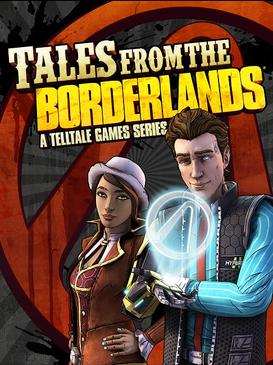
#3: Tales From the Borderlands
Hey, have you played Tales From the Borderlands?
No?
STOP READING THIS AND GO PLAY TALES FROM THE BORDERLANDS.
Unlike every other game on my list here, Tales isn't a grand epic that requires dozens of hours to get through. It'll take you perhaps eight, tops. And they will be eight of the best hours you ever spend.
Telltale Games created a brilliant template with The Walking Dead, a choose-your-own-adventure sort of game where you guided a guy named Lee and a little girl named Clementine through the perils and horrors of a zombie apocalypse. They expanded the template with A Wolf Among Us (based on Bill Willingham's brilliant and amazing Fables comic books) and A Game of Thrones, but with Tales, they may have hit their high water mark. Everything about this game--the voice acting, the art style, the sharp writing and frequently hilarious dialogue--is heads and shoulders above Telltale's other work. (Well, okay, except perhaps for the end of TWD.)
Seriously, even if you have no experience with the original Borderlands games (think Diablo as a first person shooter and a healthy splash of Mad Max), you should play this. Now. Literally right now. Don't even finish this list.
Then come back and play the next two games, too.
#2: Fallout 4
I haven't been this hooked on a game since Bethesda's last game.
Look, don't get me wrong. Bethesda's still not very good at writing. The Institution's motivations and treatment of Synths make no sense. It makes even less sense that people living on the Northeastern coast of the United States haven't figured out how to build walls without gaping holes in them. The ending(s) are ludicrously railroaded (no pun intended) and universally disappointing.
But man, what this game does right, it does right. While Bethesda may be garbage at actual writing, nobody does environmental storytelling better. You'll constantly be wondering about the stories behind, say, the rotten skeleton trapped in a hole with nothing but a teddy bear, or why this particular vault dweller decided to barricade himself in his room and starve to death. And the companions! Nick Valentine, Hancock, Curie, even the formerly-awful and equally unkillable mayor of Little Lamplight, MacCready, are all engaging, entertaining, and well-crafted. (Admittedly, I'm a huge sucker for noir, meaning Nick was always going to be my best friend by default.)
Crafting systems in games are always a huge draw for me, as well, and God knows I spent enough time modding weapons and building settlements in the dozens of hours I've spent with this game so far. While perhaps not quite as deep as I'd hoped--most weapon mods are straight upgrades, rather than offering customization options to tailor a gun to your particular needs or tastes--it provides a great excuse to revisit explored areas in search of respawned caches of aluminum, adhesive, or ceramics.
Of course, the fact that areas respawn makes no freaking sense. Nor does it make sense that bandits and raiders could outnumber normal civilians getting by on subsistence farming by a huge ratio, especially considering they're competing with roided-out super mutants for the same prey. Or that a kid can survive in the fridge 30 feet off the road for two centuries without food and water, ghoul or not. Or that people are still using bottlecaps as currency after two friggin' centuries. Or that Jet, which was created some hundred and change years after the Great War in New Reno, can be found in pre-war ruins on the East Coast. Or that... well. You get the idea.
Basically, Fallout 4 is super fun... as long as you avoid the main plot and don't think about how little sense anything makes. But man, if you can turn those parts of your brain off, it will take a month or more of your life away before you can blink.
#1: The Witcher 3
Welp. I honestly don't know where to start. No game I've ever seen has had the scope, the grandeur, and the beauty of The Witcher 3. None have had characters as complex and likable and compelling as Geralt of Rivia. None have built a world I, as a player, could simply enjoy inhabiting so much. My favorite memories of The Witcher 3 aren't in cutscenes or battles, but in simply exploring, in cresting a hill while a gentle breeze rustles the grass around me, of tracking a dangerous monster through a grim and ominous swamp, of seeing a massive whale rise out of the waves close enough by to rock my little boat.
I don't know if I can arrange words in such a way as to adequately convey how blown away I was by this game. The art is amazing--not just the graphics, but the character and creature designs, the architecture, the handcrafted scenery. You want to see what lies beyond every hill, in the depths of every valley. You want to search every ruin, explore every town. There are hundred of map markers for each a area Geralt visits in the game, and finding them isn't a chore, it's a pleasure.
And then there's Gwent. I'm on record as a guy who hates collectible card games being shoved into non-collectible card games, but I recant those views in regards to Gwent. To my chagrin, I ignored the game for most of my journey--it wasn't until I was nearly through that I finally gave it a fair shot and realized how gorram fun it is. And then I spent a dozen or so hours tracking down every last card I could still get.
And the writing? Brilliant. The characters are great--even Yennefer, who I initially viewed as the Veronica to Triss' Betty, grew on me by the end--and the themes of political intrigue and espionage interwoven through the narrative have more than a few shades of George R.R. Martin to them.
It didn't take much debate for me to place Geralt's final adventure at the top of my list. If you only play one game on this list (and, you know, you actually have the ability to invest dozens of hours into an open-world RPG), make it The Witcher 3. It's so good, it'll make you wear your girlfriend's pants and prank call a confused wizard.
It seems like the better The Flash got, the worse Arrow became.
Wait, let me back up here. Hi. I haven't written anything in awhile. I'm Ed. I'm a geek. Sometimes, far too rarely, I feel compelled to write things down. So let's talk about Arrow.
I only sat down to give The CW's Arrow a real shot (ha) about a month and a half ago. I'd heard good things from friends and fellow geeks, but I've been very, very wary about anything coming out of DC Comics for the last several years. I was born and raised a DC fan, coming into my geekiness around the same time that Knights were Falling and Doomsday and Clark Kent were punching each other so hard that buildings were shaking around them. My dad, though not a particularly nerdy soul himself, had fond memories of his own childhood comic book days and encouraged my interest. He'd return home from garage sales (this being the rural Midwest) with boxes full of old comics and trade paperbacks, almost always published by DC or Archie--and my deep-seated love of Archie is a whole 'nother subject--and I'd delve into this strange, colorful, violent, and often inexplicable world of superheroes and villains punching each other in dramatic fashion.
Around the same time, Batman: The Animated Series was kicking off. B:TAS begot Superman: The Animated Series, Supes begot Justice League, and basically, throughout my childhood and into my burgeoning adult years, I had Bruce Timm's legendary version of the DC Universe keeping me company. I also began to discover DC-oriented comics blogs like Dave's Long Box, the Absorbascon, and Chris Sims' Invincible Super-Blog. These helped me finally understand some of the stories I'd been confused by in my youth and connect to aspects, characters, and bits of DC apocrypha I'd otherwise never have been exposed to. I grew from a guy who liked comic books and superheroes to a dyed-in-the-wool DC Fanboy.
And then Christopher Nolan happened. I enjoyed Batman: Begins quite a bit; I loved The Dark Knight and lauded Heath Ledger's performance (even if he still wasn't as good a Joker as Mark Hamill). But by the time The Dark Knight Rises hit, DC's editorial staff seemed to have succumbed to the exact same madness that had, thirty years earlier, caused every comics writer in the industry to take a shot at recreating Alan Moore's Watchmen. On the film side, it was obvious; Man of Steel's promotion (and eventual execution--no pun) made it clear that whoever was in charge of making these movies thought anything from DC that hit the silver screen needed to be dour, grim, dark, gritty, and absolutely humorless. Sure, Green Lantern looked like it might be kind of fun (I won't lie, I had high hopes for Ryan Reynold's Kyle-Rayner-disguised-as-Hal-Jordan film), but its box office demise apparently sealed the deal at Warner Brothers: DC movies are totally serious business, man.
It's November 20th, 200 A.D., and Lu Meng has finally run out of college tuition money.
But look at that Intelligence score! From 42 to 68; not too shabby, in my opinion. It's not quite up to our target of 70, but we've barely even begun to earn Tactics XP yet, so there's no real rush to get there.
It's been a long road to hoe, but we were just the Joe to hoe it. Let's see how the world looks nowadays, after our long sequester.
In the Central Plains, Cao Cao and Yuan Shu are still gearing up for an inevitable war. Liu Bei is still hanging out in Ru Nan, and Lu Bu is still sleeping on Liu Bei's bed and pissing in his sink and leaving his dirty underwear draped over Liu Bei's favorite sculptures.
Actually, it doesn't look like anything's changed at all. Kinda weird.
In the southeast, Sun Ce (who is still alive, somehow) has expanded his territory a bit, and he's probably going to be coming into conflict with Liu Biao pretty soon. Biao's an annoying bugger in the early game; he's not an important character, and he doesn't really have any great officers under his command, but he's got some prime real estate that provides him with enough money and manpower to make him tough to knock out.
And our Act I antagonist, Yuan Shu, is still just sitting there with his measly two cities. I wonder if the game's scripting broke? Sometimes, a particular officer moving to the wrong place or switching sides too early can cause the scripted events to stop happening. This might actually be a good thing, because a lack of scripted events means Cao Cao won't get to automatically double his territory again when he goes to war with Yuan Shao.
Enough dicking around with odd jobs and crime fighting. It's time to make some real money!
... But first, we're going to need to do some more odd jobs and crime fighting.
First off, it's time to look into these Buy Product jobs people keep posting.
Each city has its own specialty product. (Or its specialty is that it doesn't have a specialty, but you get what I mean.) Hui Ji, if you'll remember, was all about its fish. Other cities produce exceptional oil, silk, wheat, or what have you. These Buy Product jobs task you with finding a city that specializes in a particular product, buying some, and bringing it back.
How do you find out a city's specialty? Observe!
No, seriously, you go around and use the Observe command. Sometimes, you'll find previously undiscovered characters, sometimes you'll get generic dialogue and gameplay tips, and sometimes people will enthusiastically tell you all about how City 17 is world renown for their headcrab exports.
Let's get ourselves a job we're more qualified for.
As a 17-year-old college student, our resume isn't exactly leaping off the page. However, if there's one thing undergrads are fully capable of, it's throwing a damn party. Let's join a festival!
"... you would join us."
Wait, we don't even have any responsibilities? You're literally just paying us to attend?
Do go on.
So, we head to the farm...
And get ready to party!
Lu Meng, party scientist.
Two hundred bucks and a bump to our reputation. This is the greatest job of all time.
It occurs to me that if I'd bothered to show off the stats screen at the beginning, I could have avoided losing three weeks' tuition money to my private army. C'est la vie.
Here's a list of Meng's skills. Each row of skills cover different aspects of the game.
The first row are the Job skills; they all boost the results of things a character might have to do between fights, from improving the farmlands, researching new technology, patrolling for bad guys, or hiring soldiers. Meng starts with Repair, Order, and Drill, meaning he's good at rebuilding walls, fighting crime, and teaching peasants to stick them with the pointy end.
The second row are Battle skills. These are Leadership-based abilities to be used in combat. Charge lets you push enemies around the map, Missile lets you use fire arrows, Unison lets you surround enemies and attack them at once, Settle removed negative status effects, Rally buffs morale, Surprise lets you attack non-adjacent enemies, and Distract... I'm not actually sure what Distract does.
Third row are the Strategy skills. These are also used in battle, but are based off your Intelligence stat. Blunder makes two adjacent enemy units fight eachother, Stun stuns, Entice (despite its vaguely sexy name) taunts enemies, Confuse confuses, Aero lets you change the wind's direction (useful if you play with fire), Geo lets you dig pits for enemies to fall into, and Maze... actually doesn't get any use in battle, but does let you build Mazes on the world map instead of Forts.
Fourth row: Duel skills! If you're fighting someone one-on-one, these help you beat their heads in more efficiently. I'm sure I'll cover dueling in more depth, since it's one of the few things Meng's decent at, so I'll go into more detail later.
Fifth row: Debate skills! ROTK X introduced a duel-like system for the nerdier characters. Typically used to resolve diplomatic actions, debates are abstractly represented by two men standing on a bridge and shouting at eachother until one of them falls off. Yeah, I don't know. More detail for this coming later, but suffice it to say, debating is bullshit. At least until you get Plead and Insight. And then it's bullshit in the other direction.
Finally, the sixth row covers reknown skills. These are earned in various ways, and give nice bonuses that help specialize your character's role in the world. Meng starts with Admiral, meaning that when he's fighting in a boat, he won't be constantly dragged around by the tide. The skill I really want for him is Warlord, which is going to require 70 Intelligence and a metric butt-ton of Tactics XP. I'd also like to pick up Doctor, since I think it will help him prolong his life--and even if it won't, it's a fun skill to have.
Whew. Let's see what the rest of the screens have in store!
So, here we are. Chai Shang is a relatively small city located in southeastern China. If the game followed the novels, it would probably be Lu Meng's base of operations for his final campaign against Guan Yu.
Romance of the Three Kingdoms X is the foundation for the perfect game. Not that it itself is perfect, by any means, but the fundamental structure of it--control any character you wish in the midst of a sprawling epic of war and betrayal over the course of nearly a century--is just begging for a setting like Westeros or Eberron to really bring it to life.
What is RotK10, you ask? Well, as the name implies, it's the tenth in Koei's line of strategy (and occasionally strategy/RPG) games about the Three Kingdoms era of ancient China. Like its more famous cousin, Dynasty Warriors, ROTK takes the characters and events from Luo Guanzhong's Romance of the Three Kingdoms novel and lets you experience/recreate history as them; unlike the Warriors games, though, this series aims for a more realistic take on the characters, pulling characters like Guan Yu and Cao Cao off the front lines and putting them in charge of armies, cities, and empires.
Most of the ROTK games are straightforward grand strategy games. Pick (or create) a ruler and try to conquer/unite China. However, a few games in the series offered a twist: rather than controlling Sun Quan, why not play as Taishi Ci? Let the AI handle the deal-making and warmongering, while you train your martial skills, journey the land seeking adventure and glory, or just sit in town and teach the peasants how to work a field properly. These games allowed players the freedom to tell their own, emergent stories, to tinker with the systems and figure out how to break them, and to immerse themselves into the game world--at least as far as the clunky, menu-driven UI would let them. They were so beloved that they spawned sites like SimRTK, allowing players from around the world to engage in a forum-based MMO version of the games.
Sadly, the series seems to be defunct. Koei's last pair of entries were both straightforward empire building titles, and sales of ROTK XI were so poor in the U.S. that XII will likely never be ported. The chances of us getting another RPG hybrid in the series appear to be nil.
But at least we can still play our beloved old PS2 games on our modern systems, right?